
Innovation co. is the only company I found to be true masons in restoring brownstones, especially stoops. After my own research I found them to be true master masons.
Brooklyn's master masons since 1995. Specialists in brownstone restoration, brick pointing, fire escape restoration, stoop reconstruction, and NYC landmark preservation — every craft performed in-house, no subcontracting.
For three decades, Innovation Construction NY has worked on the most exacting brownstone, limestone, and historic masonry restorations in New York City — from Park Slope and Cobble Hill to Harlem and Riverdale. Our craftsmen don't just rebuild; they read each façade like a manuscript, matching mortar to original recipes, hand-casting replacement stones, preserving every detail the original mason intended.
What follows is the story of a brownstone restoration — told the way it actually unfolds, from the cornice all the way down to the sidewalk. Each chapter is a different craft we perform in-house. No subcontracting. No shortcuts.
Where the building meets the sky — and where the trouble starts.
The cornice is a brownstone's most exposed — and most decorative — element, and the first to fail. Bracketed Italianate cornices crack under a century of freeze-thaw cycles. Dentil courses crumble. Pendant drops fall to the sidewalk. Roof membranes detach at the parapet. Water that gets in here ends up running through your top-floor ceiling within two winters.
We restore decorative cornices to original detail — hand-carved corbels, missing modillions cast to match, broken bed molding profiled exactly. Above the cornice, we install modern membrane roof systems integrated with restored cap flashing. If your top floor is staining, the work starts here.
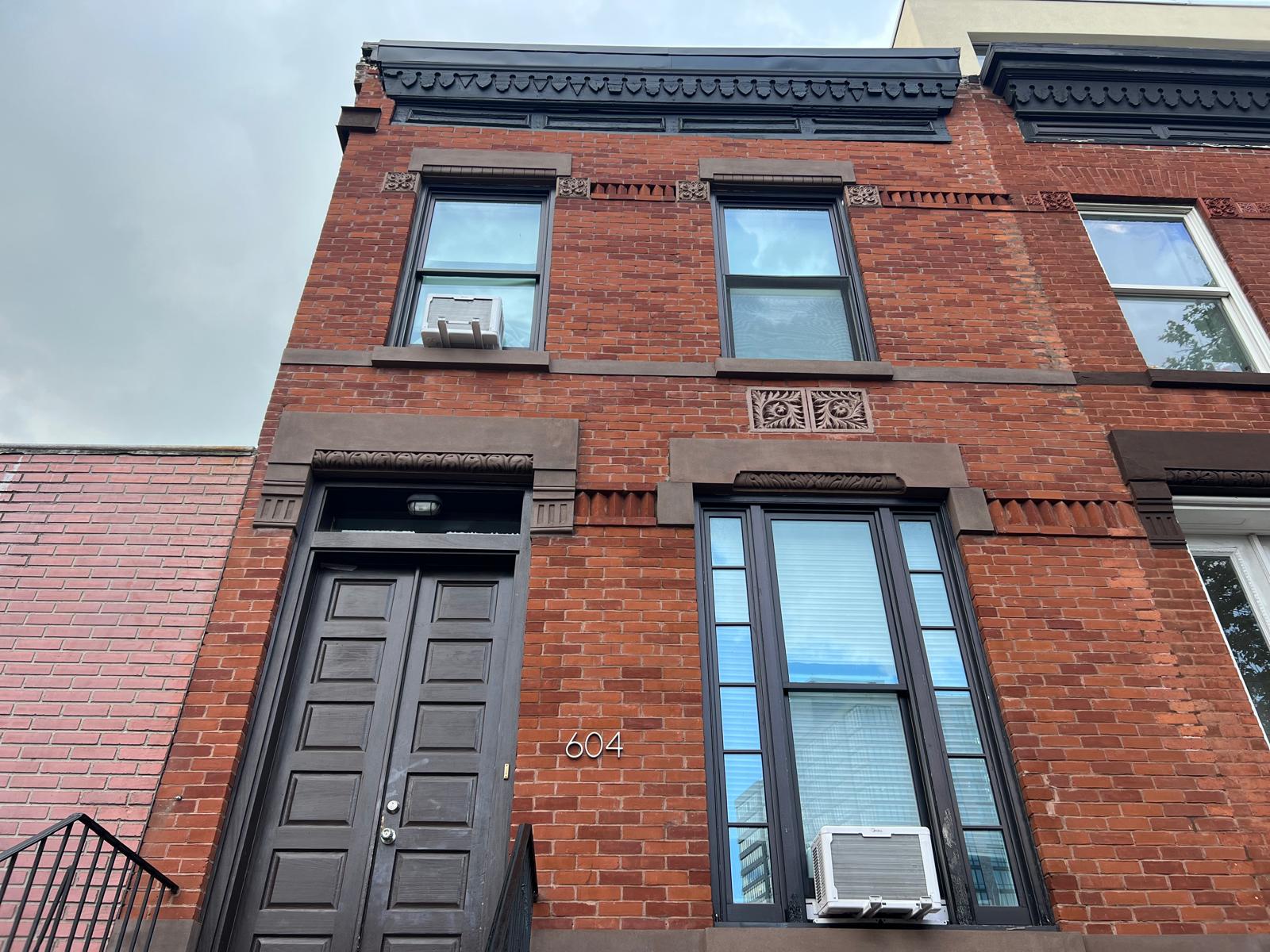
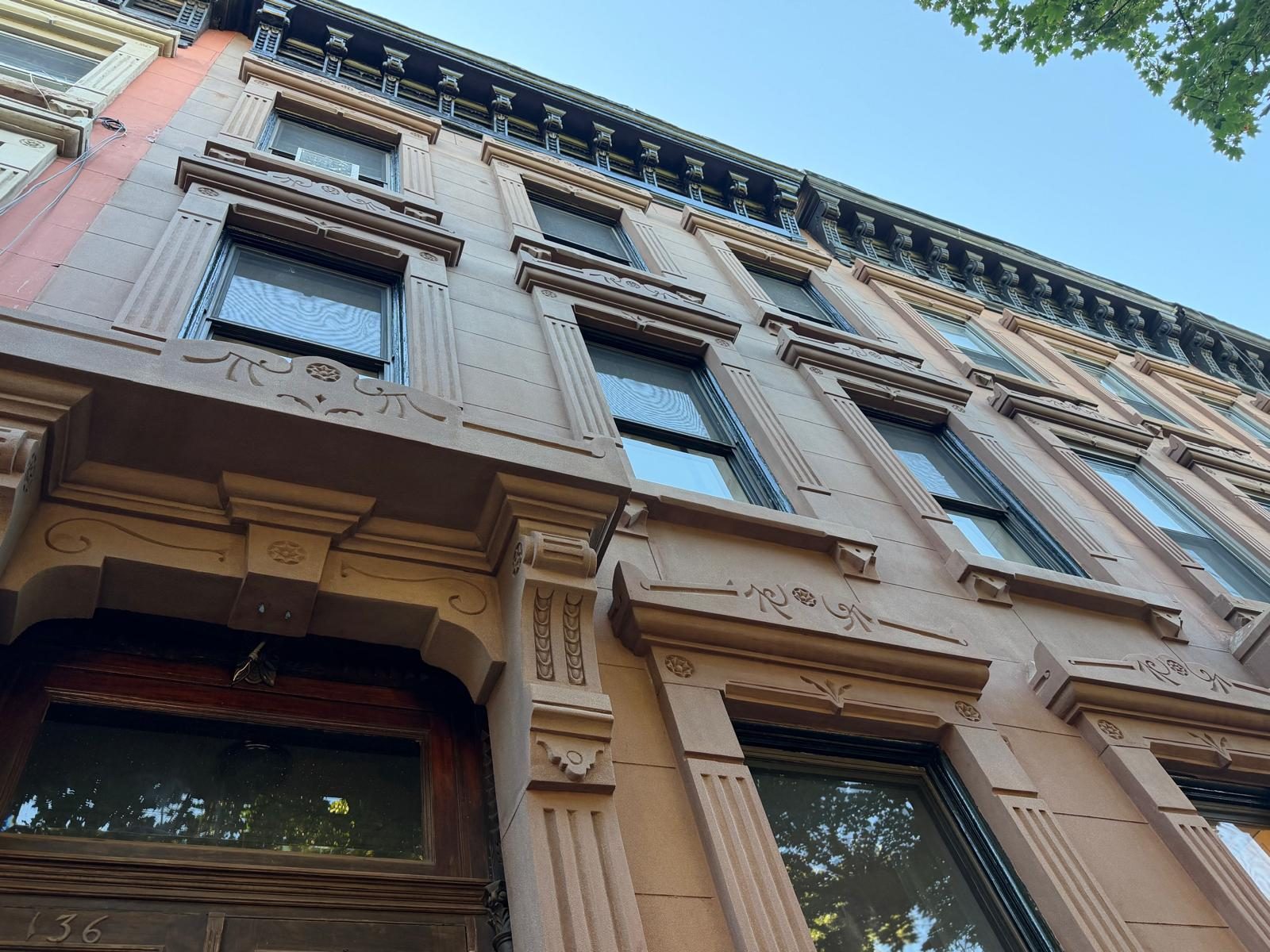
The face it shows the world. The reason you bought the house.
Brownstone is a soft sandstone. After 120 years of New York weather, it doesn't fail uniformly — it spalls, flakes, and sugars where the mineral structure breaks down. Limestone fails differently, dissolving in acid rain. Brick rolls back further still. The right repair depends on the right diagnosis, and that diagnosis is what most contractors miss.
Our crews hand-cast replacement brownstone units on site to match the original color, texture, and grain. We patch with mineral-based pigmented mortars — never synthetic stucco coatings, which trap moisture and accelerate failure. For brick pointing, we use natural hydraulic lime (NHL) mortar matched to the original mix — softer than the brick, so the wall moves correctly. Portland cement on a pre-1900 façade is the single most common — and most damaging — mistake in NYC masonry.
Wrought, cast, and structural. Every piece bolted to your building since 1880.
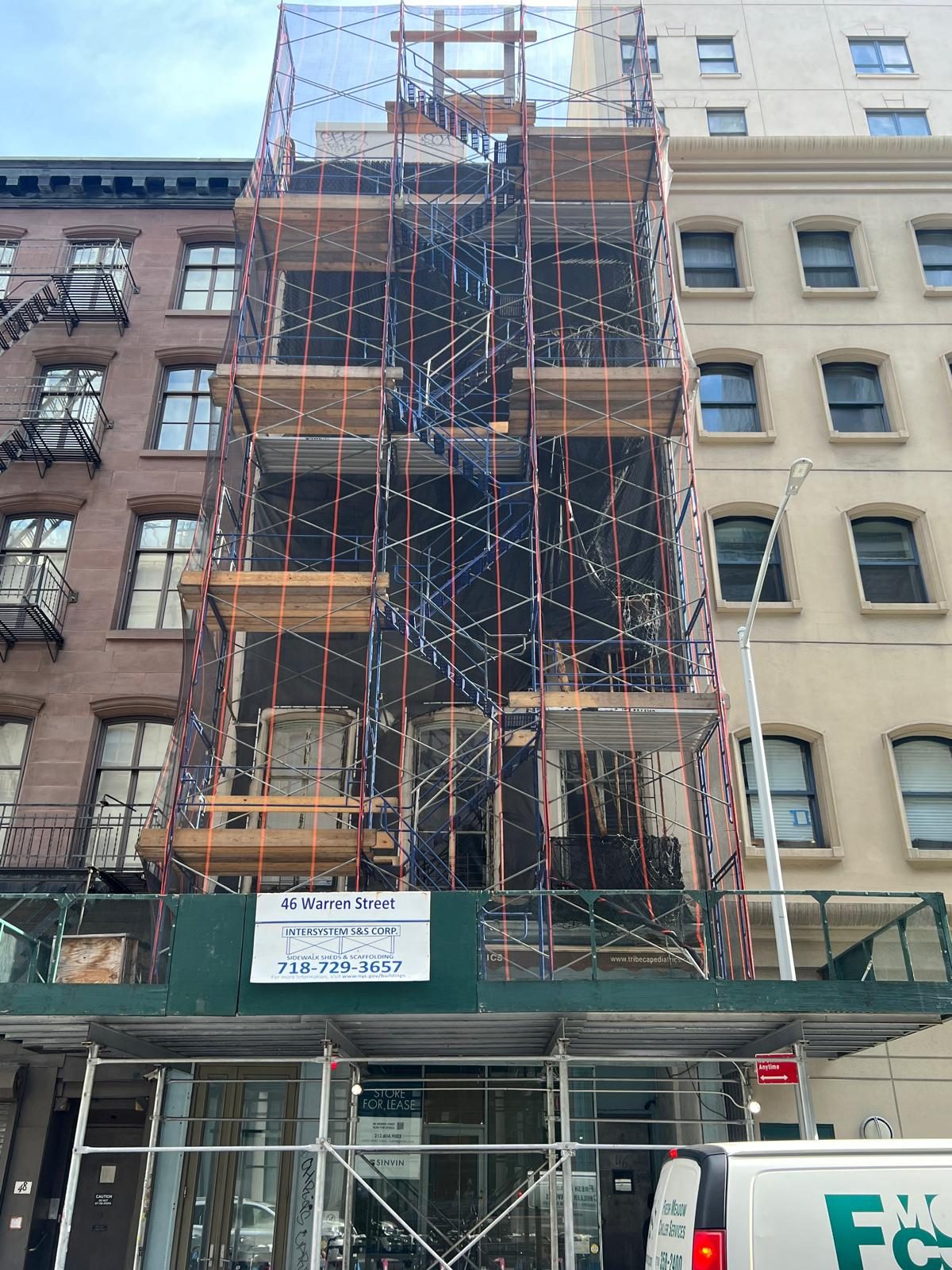
NYC fire escapes carry both code and consequence. A failed fire escape inspection means an FDNY violation and a tenant safety problem in the same week. Beyond fire escapes, the city's brownstones are alive with cast iron: stoop railings, area-way gates, balcony grilles, decorative spear-tipped pickets, ornamental newel post caps. All of it rusts. All of it can be saved.
We sandblast, repair, and AWS-certified weld structural steel. We replicate missing decorative pieces — castings or hand-forged. Every assembly gets a zinc-rich primer base coat and a high-build top coat that holds against salt air. We're certified for Local Law 11 façade inspections and prepare all FISP filings in-house.
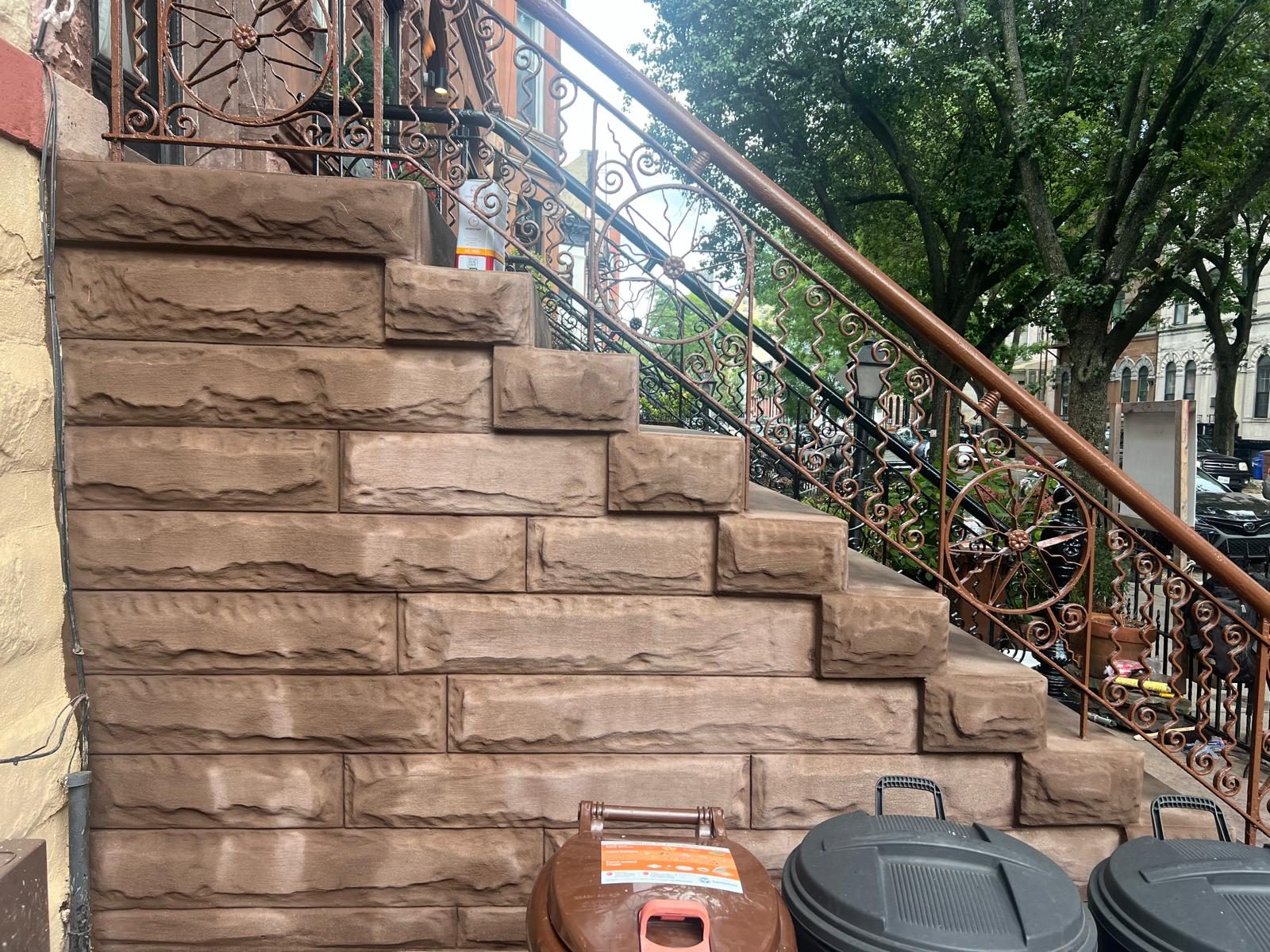
Where street becomes home. The single most photographed feature on every brownstone block.
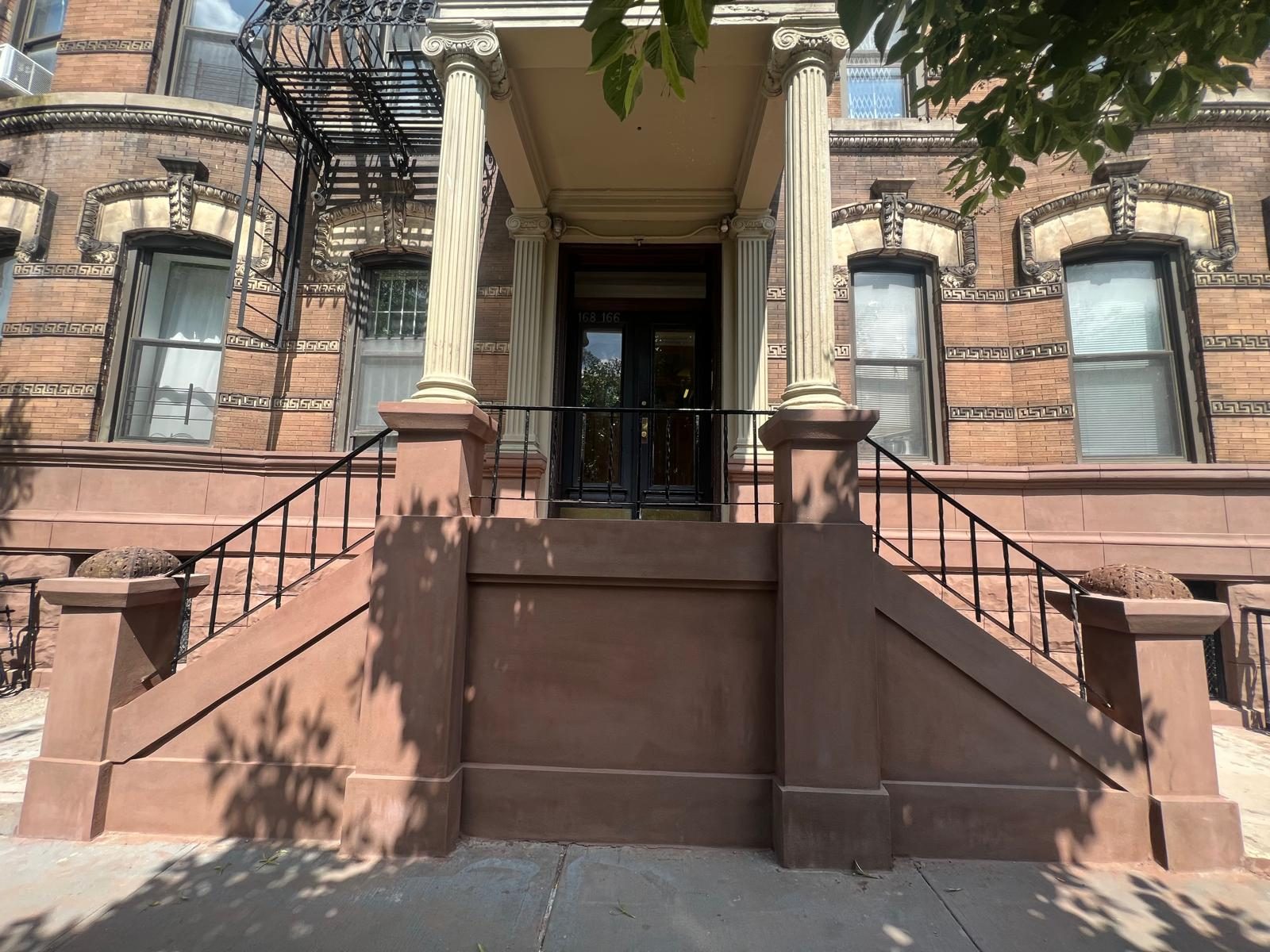
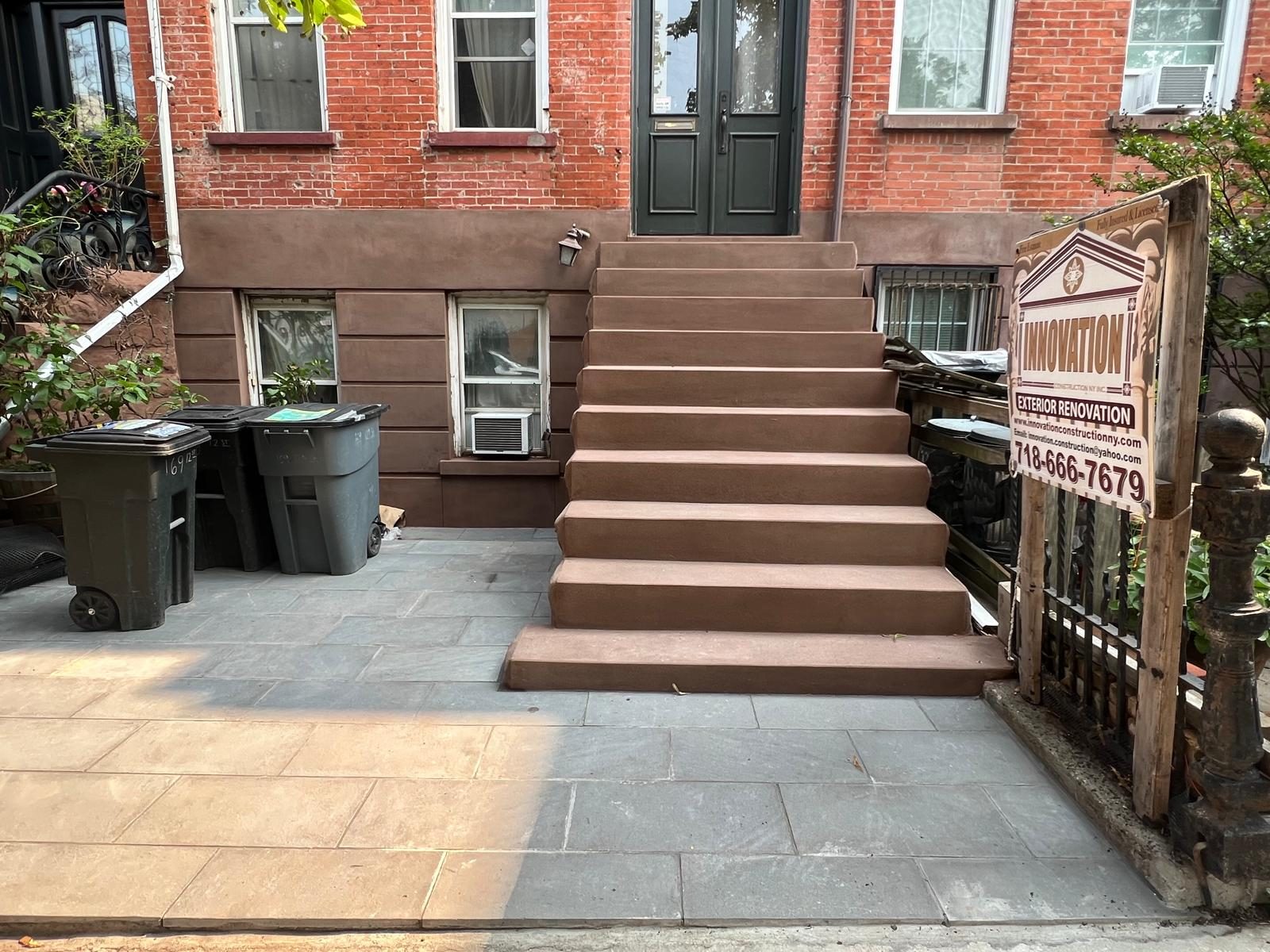
The Brooklyn stoop is structural sculpture. Each tread is a 4-foot-wide hand-cut block of brownstone or bluestone, set on stepped masonry walls that taper outward from parlor floor to sidewalk. Decorative balustrades flank each side, capped by urn-topped newel posts. Ornamental iron handrails run the length. When stoops fail, they fail visibly — and dangerously.
We rebuild stoops the original way: stepping the side walls course by course, setting each new tread on full beds of mortar, hand-carving replacement balusters and newel caps. An entire stoop reconstruction takes us four to six weeks, and every joint matches the original profile. Carved entry surrounds — keystone arches, fanlight transoms, brass door hardware — we restore alongside the masonry.
Sidewalks fail under DOT inspection, and the homeowner gets the violation.
NYC homeowners are legally responsible for the sidewalk in front of their property. Once the DOT issues a sidewalk violation, you have 75 days to repair it before the city does the work and bills you — usually at three times the cost of a private contractor. Beyond compliance, restored bluestone or properly cured concrete is part of the building's value.
We pour NYC DOT-compliant 4,000 psi air-entrained concrete with proper joint spacing and expansion control. For historic homes, we source and reset original bluestone — sometimes from the same quarries that supplied Brooklyn 100 years ago. Brick paving courtyards, gardens, and walkways: laid on a compacted sand bed, edge-restrained, period-correct pattern.
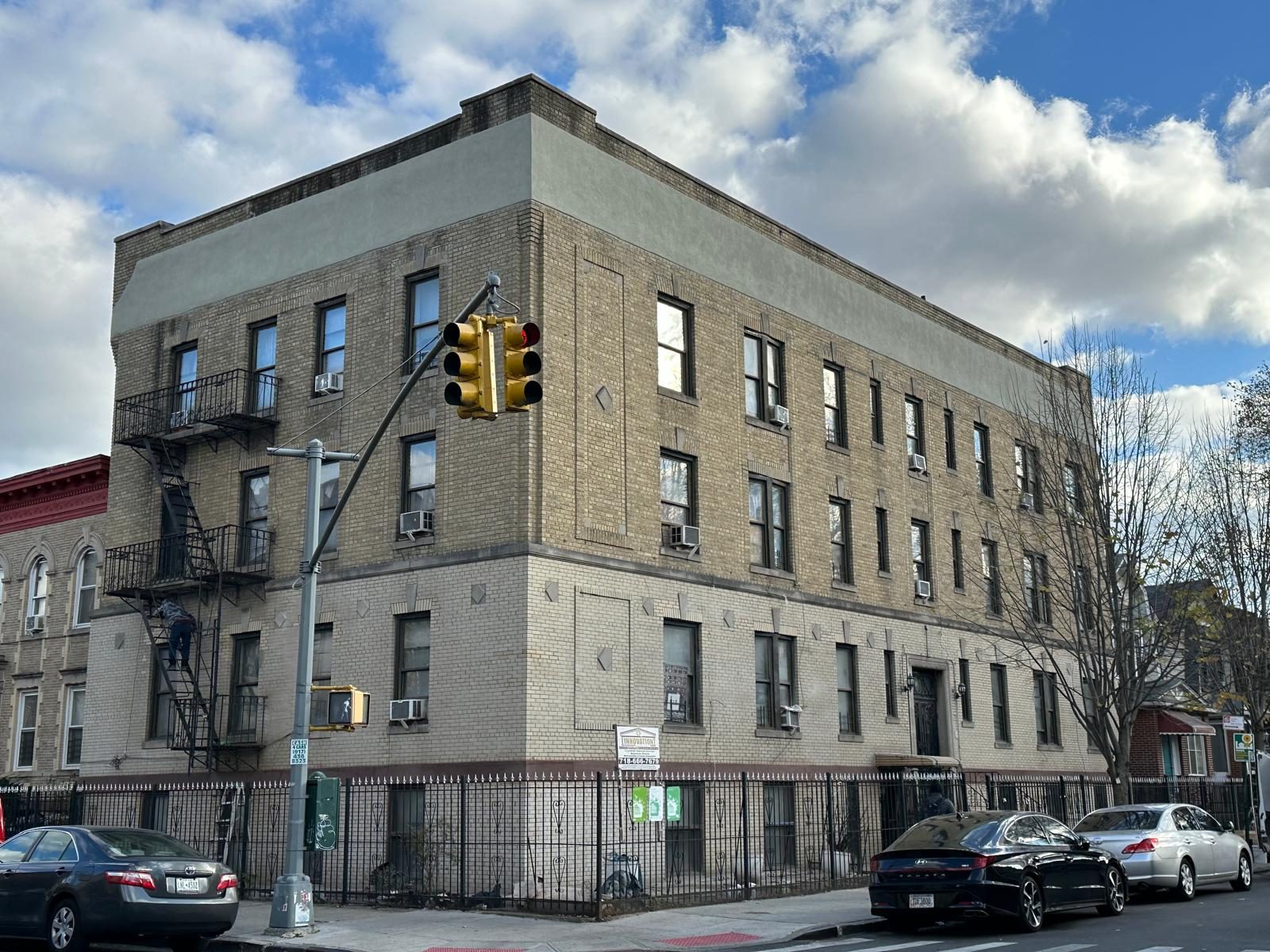
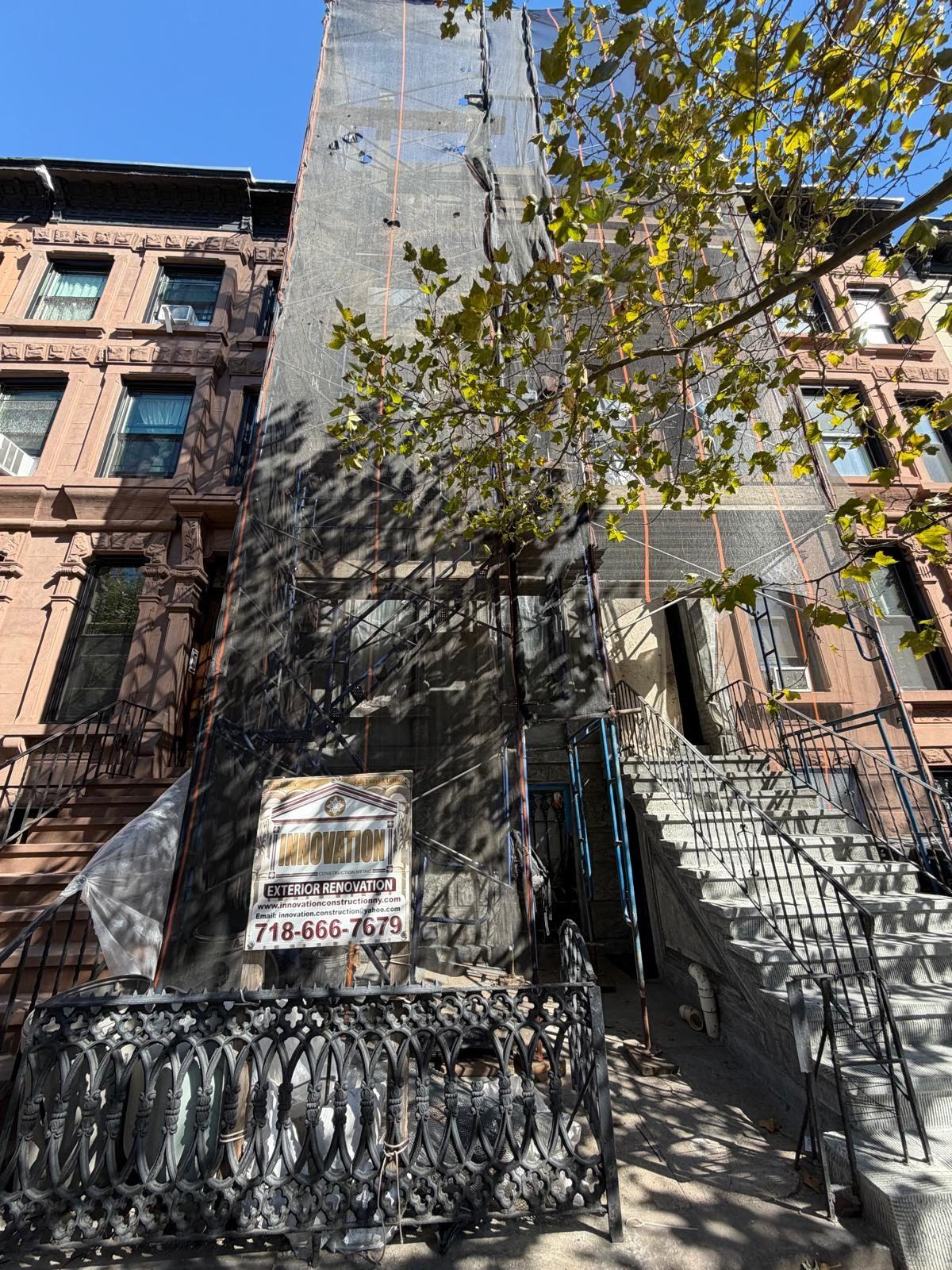
Restoration ends inside. The same crew that handled the façade handles the plaster.
Most restoration firms hand off interior work to subcontractors — and the result shows. A new plaster crown molding installed by an unfamiliar crew never matches the cornice work outside. We keep interior plaster and painting in-house, supervised by the same project lead who restored your façade. The standard stays the same.
For exterior painting, we use mineral silicate coatings on historic façades — they bond chemically with masonry instead of forming a film over it, allowing the wall to breathe. For interiors, we use traditional lime plaster for historic walls and ceilings, hand-floated to original texture. Restored crown moldings, ceiling medallions, and decorative trim, finished to match the era of the home.
When the city says this building matters — and the permits take longer than the work.
If your home is in a historic district — Park Slope, Brooklyn Heights, Cobble Hill, Stuyvesant Heights, Bedford, Fort Greene, Crown Heights North, Carroll Gardens, or any of NYC's other 150+ designated districts — every change to the façade requires NYC Landmarks Preservation Commission (LPC) review. The wrong contractor can have your work shut down mid-project and your homeowner held responsible for restoration.
We are an LPC-approved historic contractor with dozens of supervised restorations across NYC historic districts. We prepare and file all LPC documentation in-house: Certificates of No Effect (CNE), Permits for Minor Work, and Certificates of Appropriateness (C of A) for full Commission review. We attend Public Hearings, respond to Commission comments, and revise drawings until approval. Then we do the work — to LPC specification, by the same crew.
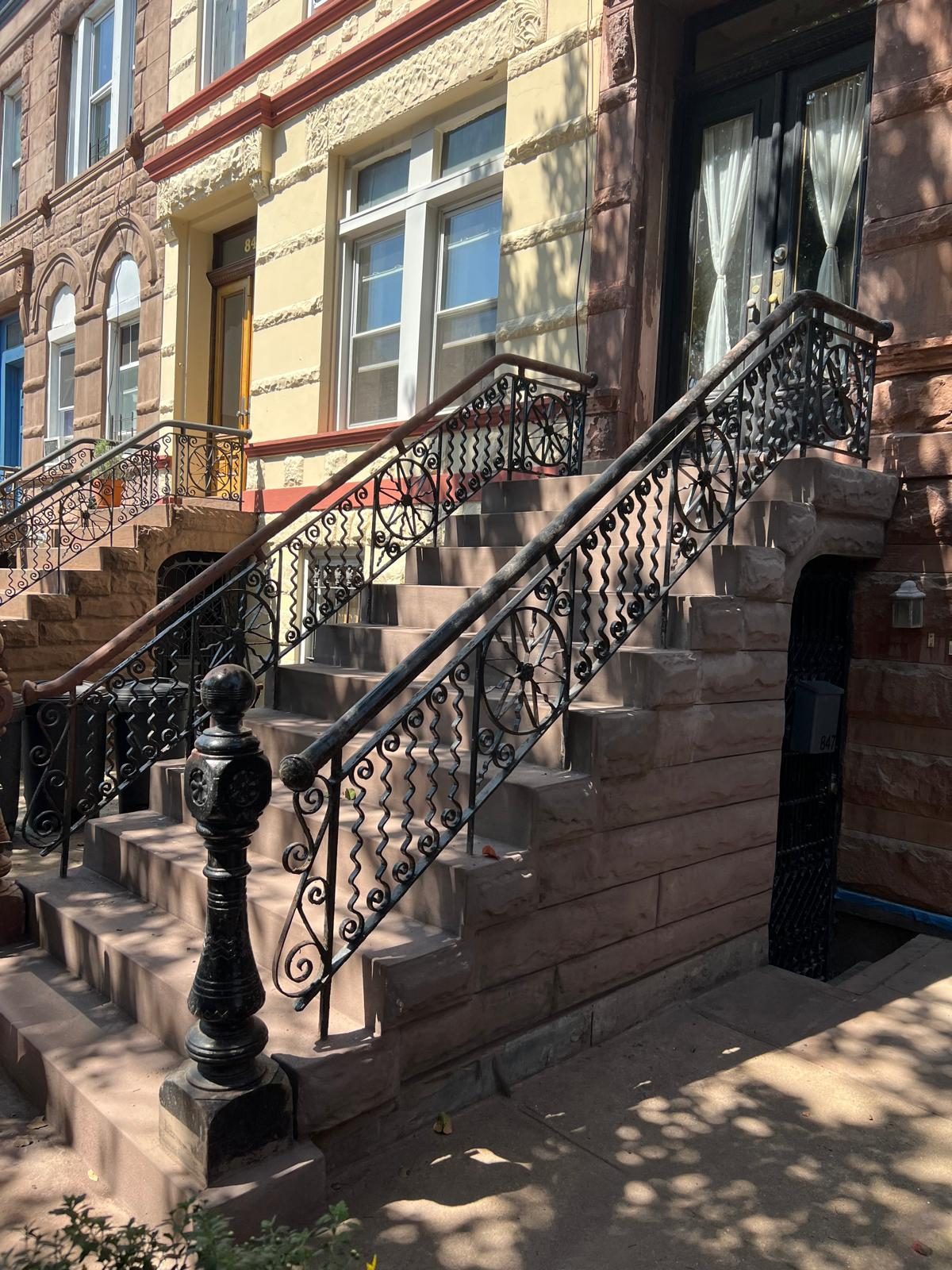
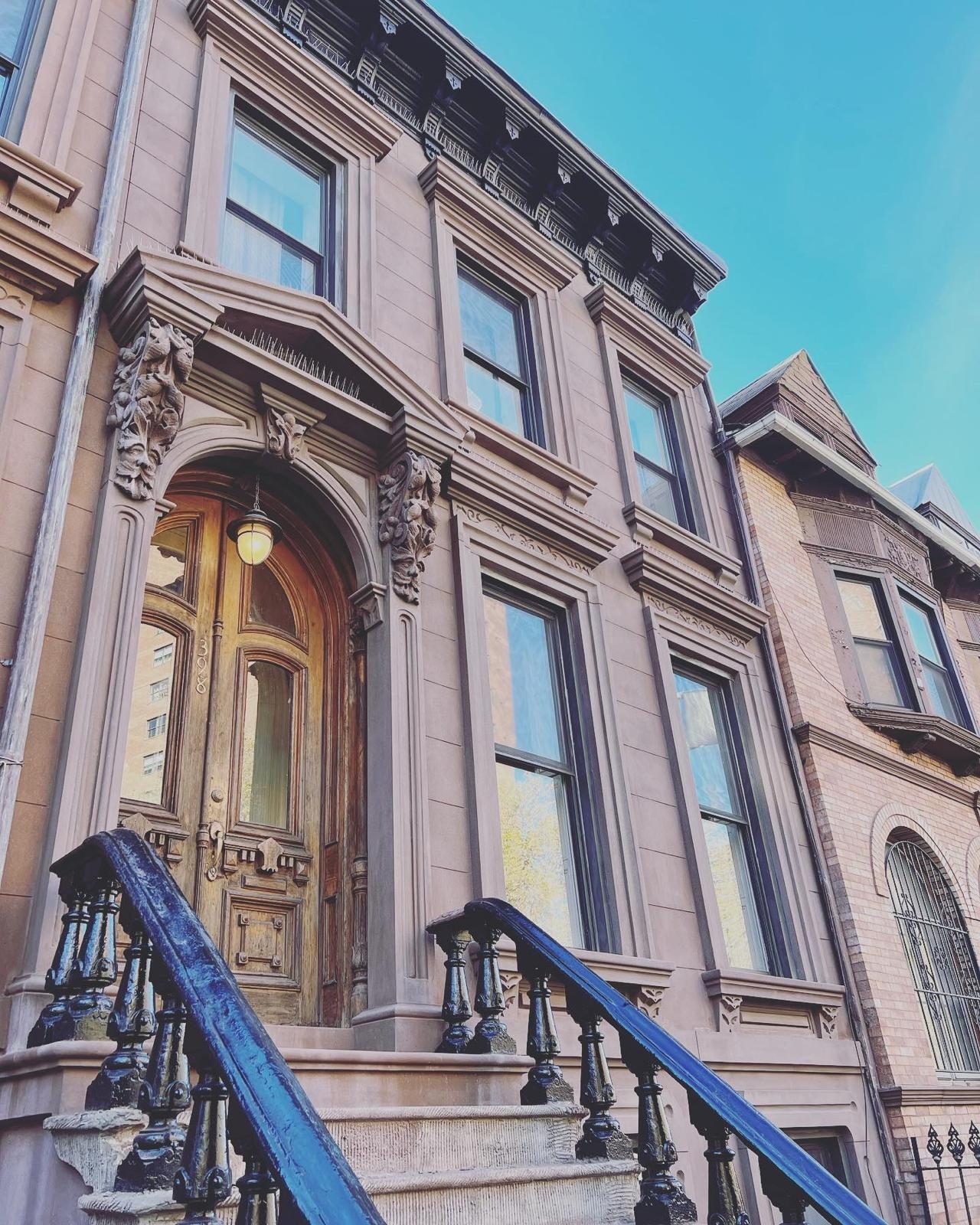
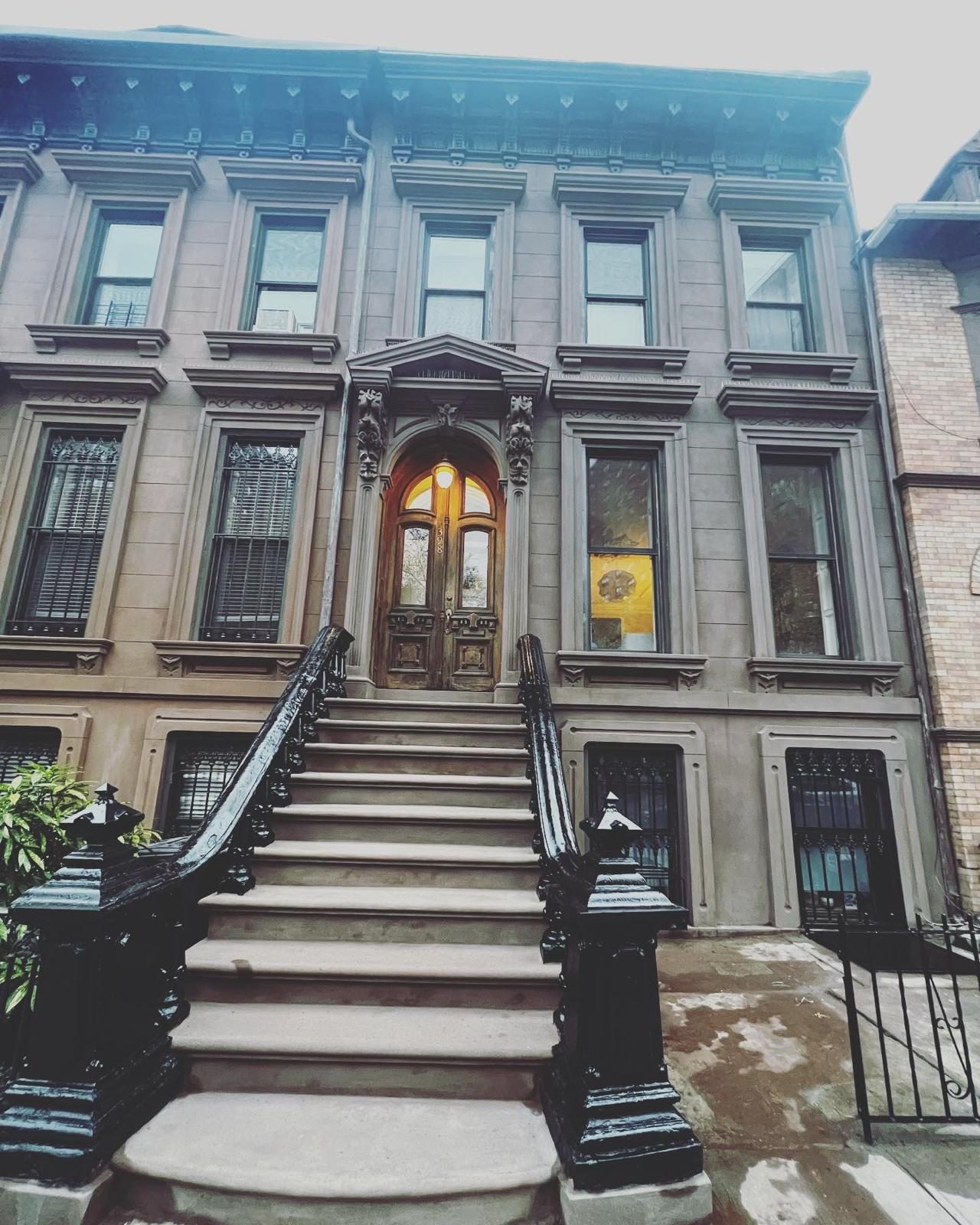
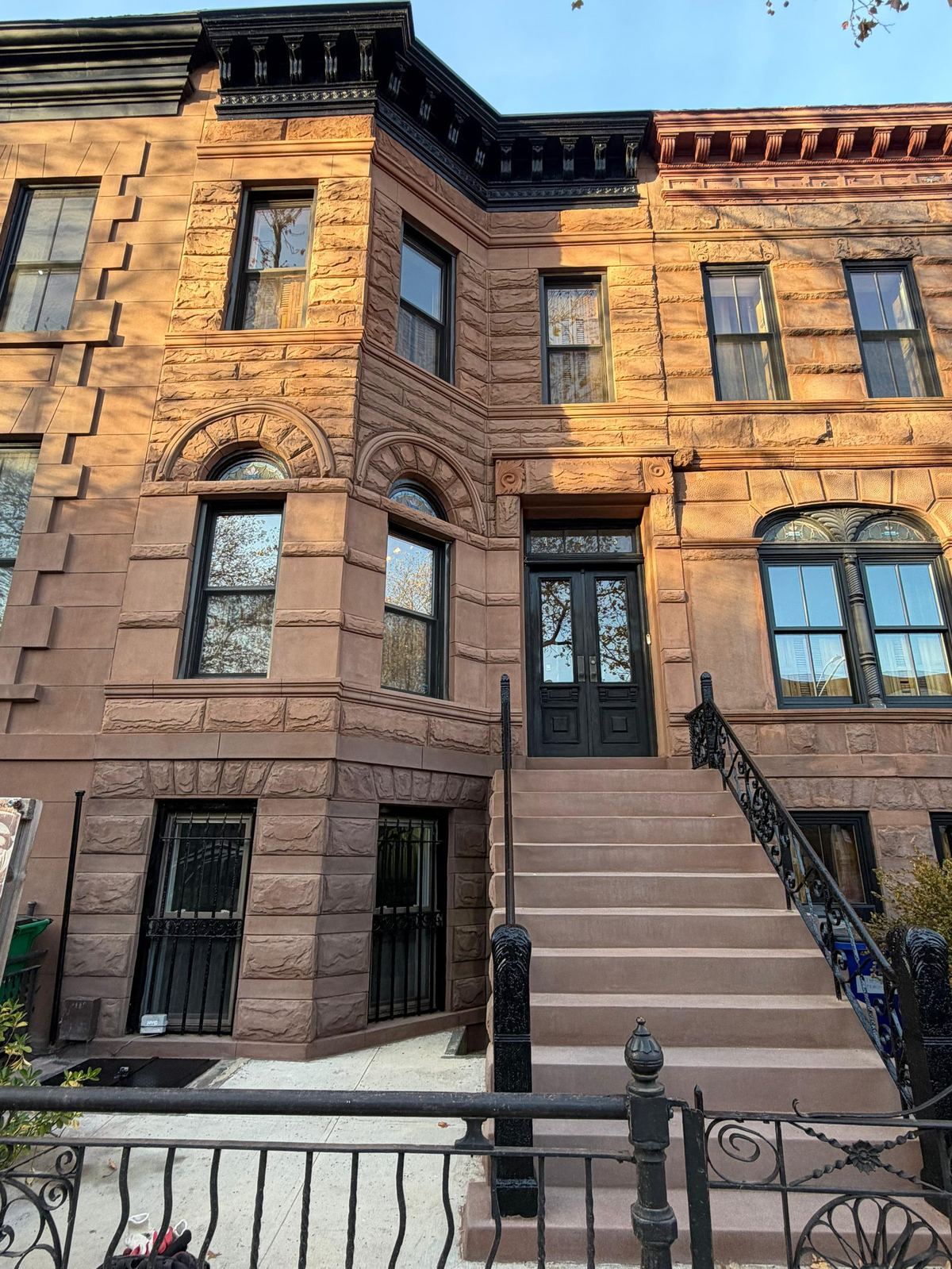
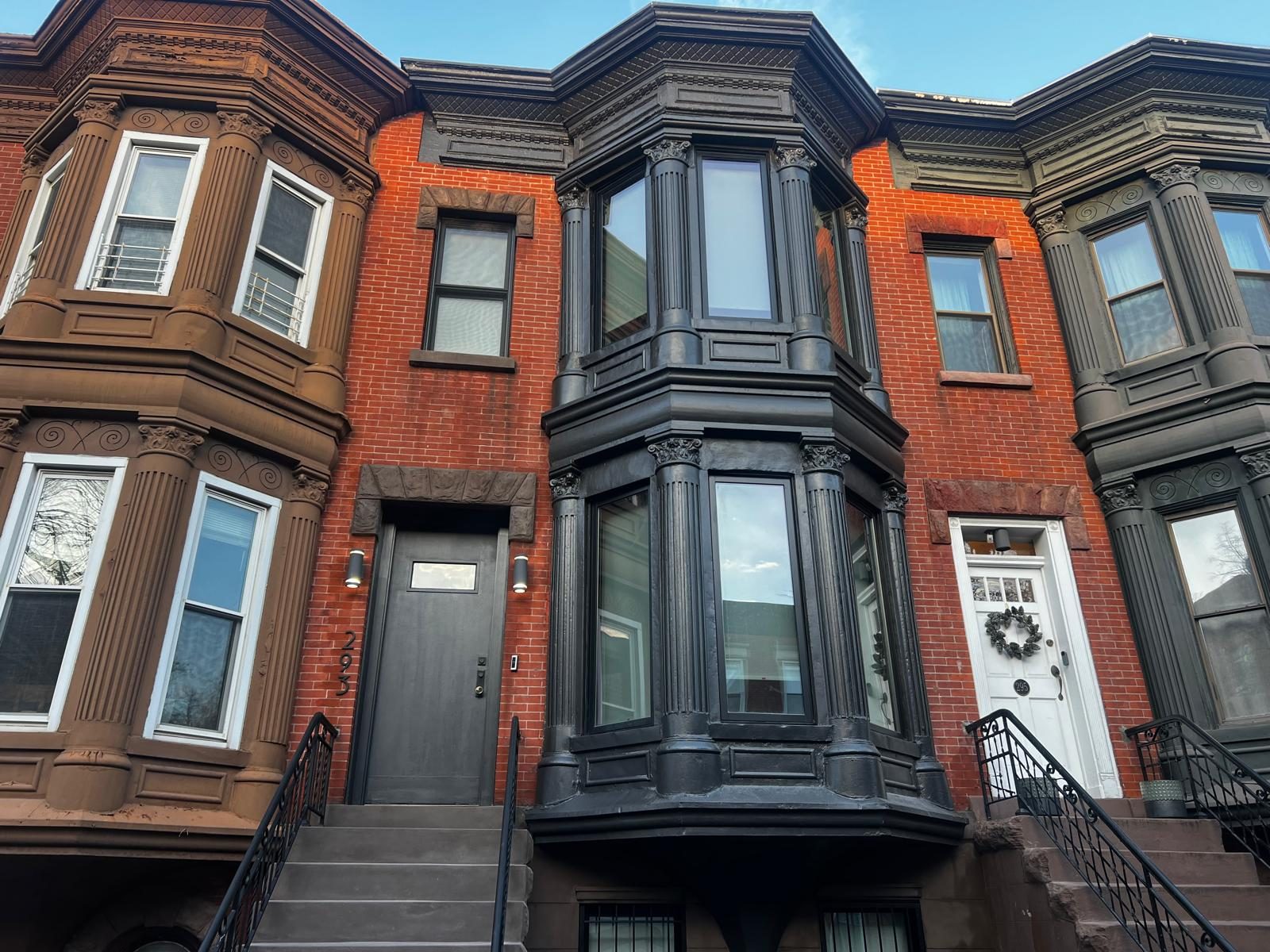
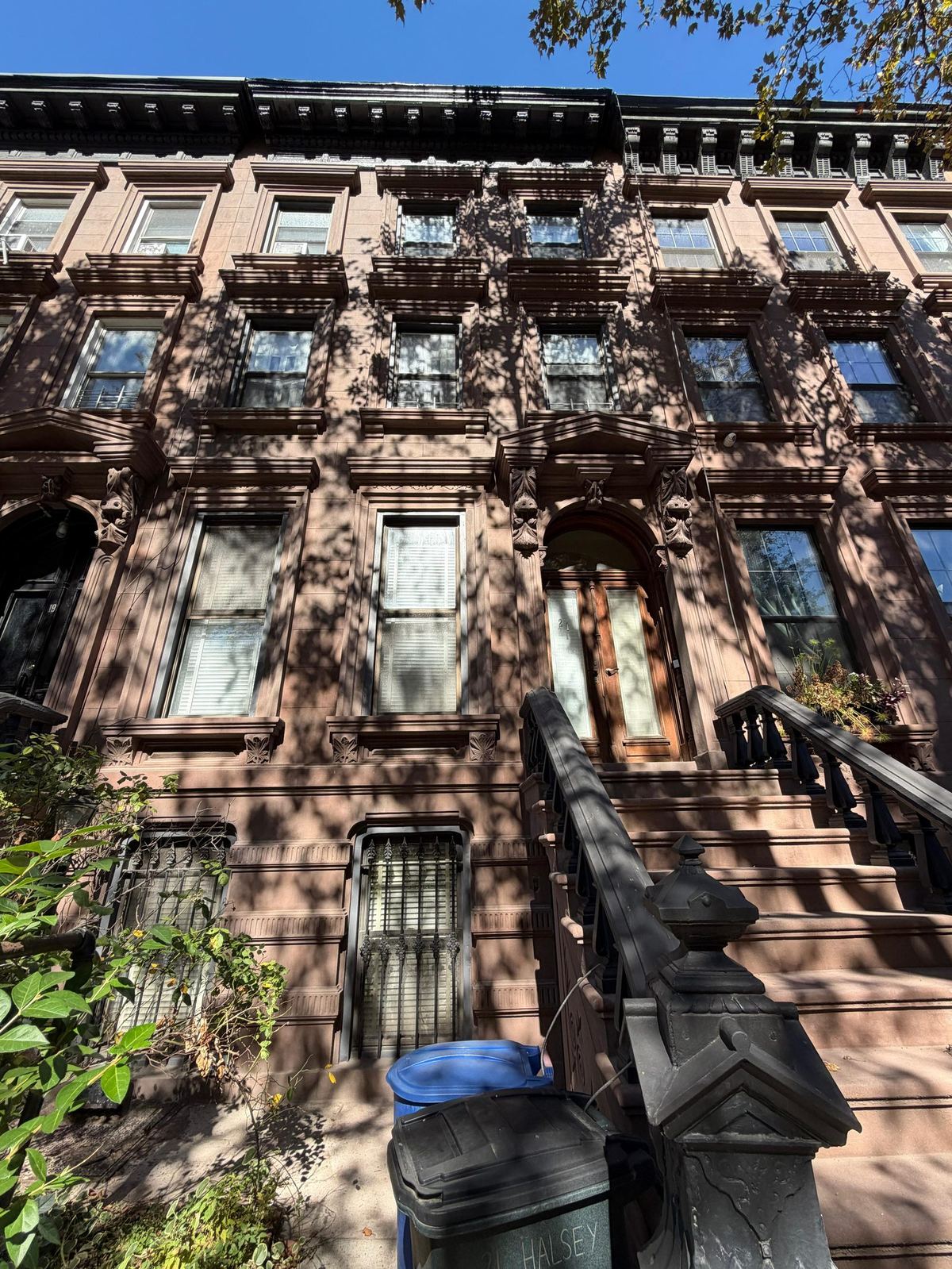
A representative selection from three decades of brownstone, limestone, and historic façade work across Brooklyn, Manhattan, Queens, and The Bronx.
Innovation co. is the only company I found to be true masons in restoring brownstones, especially stoops. After my own research I found them to be true master masons.
Ekram came out personally to evaluate our needs. He listened and expanded our ideas — from the perfect color to slight architectural changes. Our final result was better than we expected.
Innovation redid my complete 3-story brownstone façade and stoop restoration in Park Slope. Their details to the restoration are top notch.
Innovation Construction NY was founded in by master mason Ekram Hossain by master mason Ekram Hossain. Trained in traditional stone and brick craftsmanship before bringing his trade to New York, Ekram built the company one brownstone at a time — beginning with a single restoration in Park Slope and a referral-only client base.
Three decades later, we remain a family-run firm based in Brooklyn. Many of our masons have been with the company for over twenty years. Ekram still walks every site at the critical phases — the standard has not changed, the work has not changed.
From the brownstones of Park Slope to the limestones of the Upper West Side — historic and contemporary façades across all five boroughs of New York City.
Brownstone restoration is unfamiliar territory for most homeowners. Here are the questions we get most often.
Look for receding or crumbling mortar joints, hairline cracks, water staining inside, brownstone surfaces that flake when touched, or stoop treads that wobble. If you can scratch out mortar with a key, restoration is overdue.
We provide free on-site assessments and will tell you honestly whether you need targeted spot repair or full façade restoration.
Yes. We are an LPC-approved historic contractor with dozens of supervised restorations across Brooklyn Heights, Park Slope, Cobble Hill, Carroll Gardens, Fort Greene, Stuyvesant Heights, Bedford, and Manhattan historic districts.
We prepare and file all permit documentation in-house — Certificates of No Effect (CNE), Permits for Minor Work, and Certificates of Appropriateness (C of A) for full Commission review.
Our primary service area is Brooklyn — including Park Slope, Carroll Gardens, Cobble Hill, Boerum Hill, Brooklyn Heights, Fort Greene, Bed-Stuy, Crown Heights, Clinton Hill, and surrounding brownstone neighborhoods.
We also work throughout Manhattan (Harlem, Chelsea, Upper West Side, Tribeca), Queens (Astoria, Long Island City, Forest Hills), and The Bronx (Riverdale, Mott Haven).
A full façade and stoop restoration on a three-story brownstone typically takes eight to twelve weeks, depending on scope. Weather, scaffolding logistics, and LPC review timelines can extend this for landmarked properties.
For smaller projects — repointing only, or stoop repair — work can often be completed in two to four weeks.
Mortar is the weakest link in any masonry wall — and it's meant to be. Properly designed historic mortar is softer than the brick it surrounds, so when the wall moves, the mortar cracks first and the masonry doesn't.
The single biggest mistake in NYC brick pointing is using modern Portland cement on historic walls. Portland is harder than the brick; it traps moisture and causes the brick face to spall off within a decade. We use natural hydraulic lime (NHL) mortar matched to the original mix — always.
Yes — fully licensed by the NYC Department of Buildings, LPC-approved for historic preservation work, and fully insured for liability and workers' compensation. Proof available upon request before any contract is signed.
Yes. Ekram or a senior estimator will visit your property, assess the condition in detail, and provide a written estimate within five business days. No fee, no obligation, no pressure.
Call (718) 666-7679 or use the contact form to schedule.
Materials matter as much as workmanship. On historic brownstones, the wrong materials can shorten a façade's life by decades.
We use natural hydraulic lime mortar for repointing pre-1900 masonry, hand-cast brownstone units for stone repair, mineral silicate coatings for breathable historic façades, zinc-rich primers on ironwork, and 4,000 psi air-entrained concrete for NYC DOT-spec sidewalks.
Free on-site assessment. Written estimate within five business days. No fee, no obligation. We respond to every inquiry within one business day.