Cast iron rusts. Wrought iron bends. Mild steel breaks at the welds. We rebuild all three.
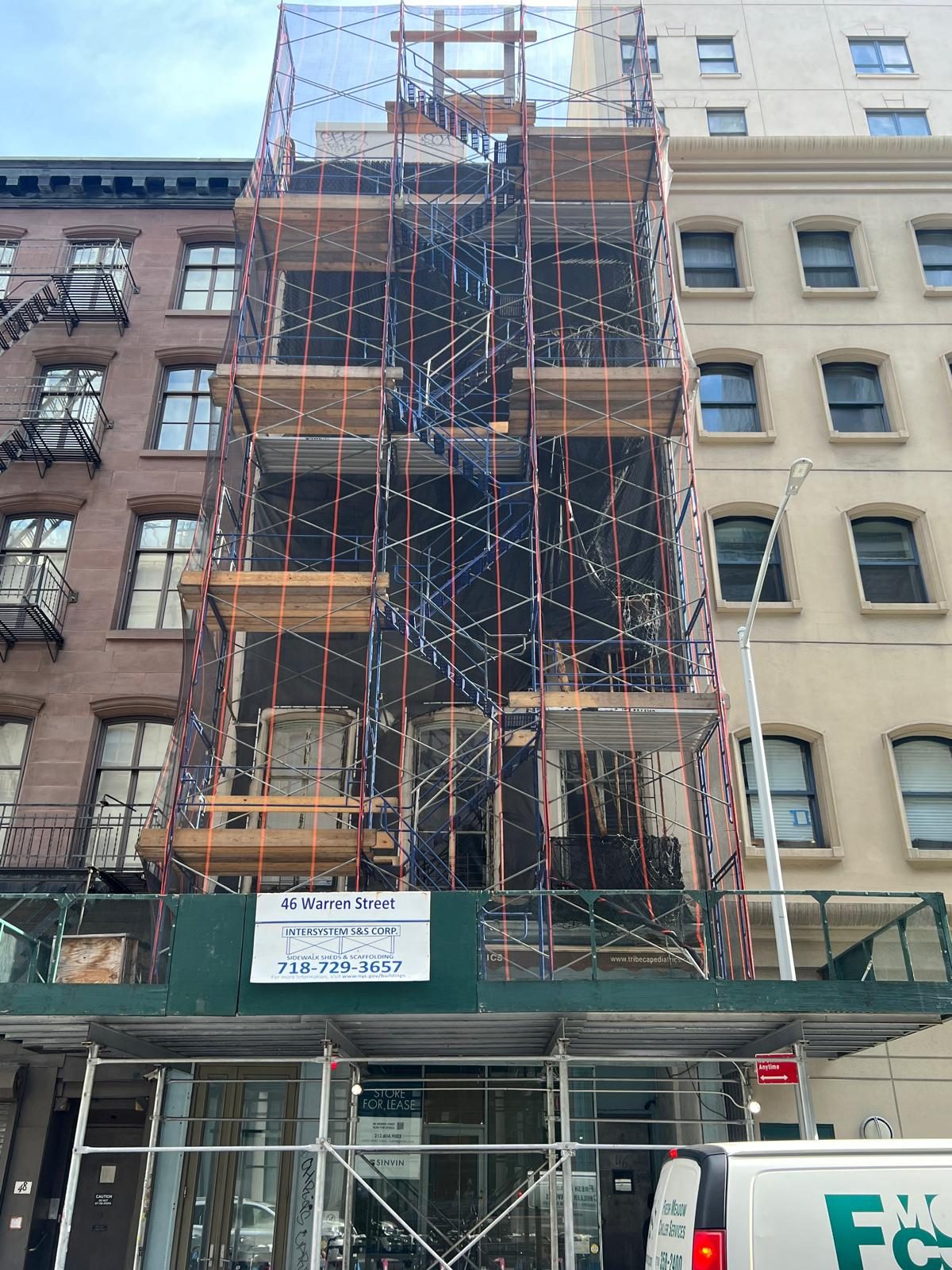
New York City has more historic exterior iron than any other American city. Cast iron stoop railings, wrought iron area gates, decorative balconies, fire escapes, fence sections with spear-tipped pickets — all of it dating from 1860 to 1940, all of it now well past its design life, and most of it still load-bearing. FDNY fire escapes are the highest-stakes category: every five years they must pass an FDNY inspection, and failure means a violation, a tenant safety problem, and a 30-day clock to remediate.
Beyond fire escapes, NYC's brownstones are alive with cast iron: stoop railings with C-scroll baluster details, area-way gates, balcony grilles, decorative spear-tipped fence pickets, and ornamental newel post caps. Cast iron rusts at the surface and then accelerates inward; wrought iron tends to delaminate at the forge welds; mild steel — used on many post-1940 fire escape repairs — fails catastrophically at the weld bead when corroded.
We rebuild all three. AWS-certified welders. In-house sandblasting and zinc-rich coatings. Pattern-matched cast iron replication for missing decorative elements. Full FDNY filings and Local Law 11 (FISP) reports prepared in-house.
No black box. Here is the exact sequence we follow on every project, from first phone call to final inspection.
Visual inspection plus ultrasonic thickness testing on structural members. We identify load-bearing failures, decorative losses, and corroded fasteners. For FISP-rated buildings, we file the inspection report.
Where major work is required, decorative elements are removed and taken to our shop. The fire escape itself is supported in place during structural repairs.
All elements are blasted to bare metal (SSPC-SP10 / near-white). Loose rust, mill scale, and old paint are removed without damaging the iron.
Failed welds are ground out and rebuilt to AWS D1.1 spec by certified welders. Structural plates, replacement angles, and connection hardware are fabricated in-house.
Missing decorative elements — finials, brackets, scrollwork — are pattern-cast from existing units or, when no original survives, hand-fabricated to match period profiles.
Zinc-rich primer (75-90% zinc by weight) is applied at 3-5 mils. Intermediate epoxy coat for chemical resistance. Polyurethane topcoat in the original color (typically black) for UV resistance. Total system life: 25-30 years.
All elements are reset, fastened, and final-coated on site. For fire escapes, we coordinate the FDNY closeout inspection and file the closeout paperwork.
Materials matter as much as workmanship. The wrong material can shorten a façade's life by decades.
The most common — and most expensive — mistakes we see on prior unsuccessful restoration work.
FDNY fire escapes must be inspected every five years by a qualified inspector and remediated as needed. Buildings over six stories are also subject to Local Law 11 (FISP) façade inspections on a five-year cycle, which include exterior ironwork as part of the inspection scope.
A typical Brooklyn brownstone fire escape restoration runs $15,000-$45,000, depending on the number of landings, the extent of structural work needed, and FDNY filing requirements. Spot repairs and recoating only can run $4,000-$10,000.
It depends on the condition. For light surface corrosion and a stable structure, we can sandblast, prime, and coat in place with appropriate containment. For broken or detached pieces, removal to our shop is required for proper repair.
Local Law 11 — formally the Façade Inspection Safety Program (FISP) — requires periodic exterior inspections on all buildings over six stories. The inspection covers the façade, including fire escapes and ornamental ironwork. Repairs identified by FISP must be filed and closed out with NYC DOB. We perform the inspection, the repair, and the closeout filings.
Yes. We pattern-cast from existing units when even one example survives. When no original remains, we hand-fabricate replicas based on period catalogs and photographs of similar buildings on the block.
Free on-site assessment. Written estimate within five business days. No fee, no obligation.