When the city says this building matters, every change requires a Commission review. We file. We hearing. We do the work.
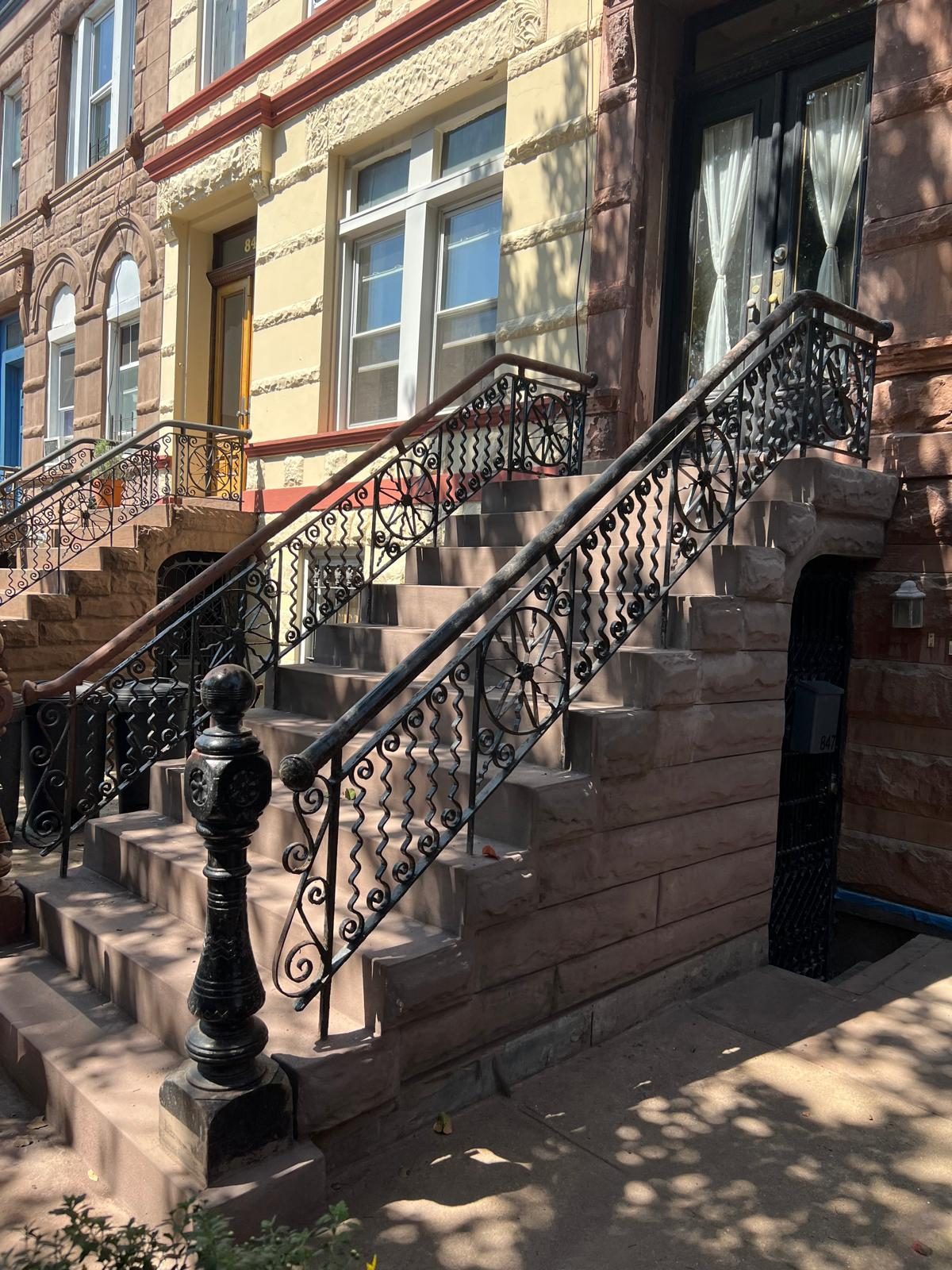
If your home is in a New York City historic district — Park Slope, Brooklyn Heights, Cobble Hill, Carroll Gardens, Stuyvesant Heights, Fort Greene, Bedford, Crown Heights North, Greenwich Village, SoHo, Tribeca, Upper West Side, Upper East Side, Harlem, or any of NYC's 150+ designated districts — every visible change to the façade requires NYC Landmarks Preservation Commission (LPC) review. The wrong contractor can have your project shut down mid-work, leave you with a stop-work order, and force costly remediation back to original condition.
LPC review comes in three forms. Certificate of No Effect (CNE) covers like-for-like repair using the same materials and profiles — most repointing, spot repair, and ironwork repainting falls here. Permit for Minor Work (PMW) covers small visible changes — a new front door, modest visible repair where some choices must be made. Certificate of Appropriateness (C of A) covers substantive change — a new building, an addition, a window replacement, a façade reconstruction — and requires a full public hearing at the LPC.
We are an LPC-approved historic contractor. We prepare and file all LPC documentation in-house. We attend public hearings. We respond to Commission comments. Then we do the work to LPC specification, by the same crew that handled the filing. Most other contractors hand off the permit work to a separate expediter. We don't. The continuity matters.
No black box. Here is the exact sequence we follow on every project, from first phone call to final inspection.
We pull the LPC file for your building — the original designation report, any prior LPC filings, the historic photographs in the LPC database. The history determines what is and isn't reversible.
We meet with you to define the project scope, then determine which LPC filing path applies (CNE, PMW, or C of A) based on the visibility, materials, and scale of the proposed work.
We prepare drawings showing existing conditions, proposed work, and materials. For C of A applications, we prepare full submission packages including historic photo references.
We file the application with the LPC, pay the filing fee, and track the application through the Commission's review process. For CNE, expect 30-45 days. For C of A, expect 90-180 days including hearing.
If a public hearing is required, we attend on your behalf — present the proposal, respond to Commissioner questions, and revise drawings to address Commission feedback.
After LPC approval, we coordinate with NYC DOB for the construction permit. For most projects, the LPC permit is a precondition to the DOB permit.
We execute the work to LPC specification. Any field changes are submitted as LPC amendments. At completion, we file the closeout documentation.
Materials matter as much as workmanship. The wrong material can shorten a façade's life by decades.
The most common — and most expensive — mistakes we see on prior unsuccessful restoration work.
Look up your address in the LPC's online database (lpc.nyc.gov). If you're in a historic district, the district designation report will tell you what features are protected. We can pull this report for you as part of a free assessment.
Certificate of No Effect (CNE): 30-45 days typical. Permit for Minor Work (PMW): 45-60 days typical. Certificate of Appropriateness (C of A): 90-180 days typical, including a public hearing. Add 30-60 days for DOB permit issuance after LPC approval.
Filing fees vary by project type and scope. CNE: $200-$800 typical. PMW: $400-$1,200 typical. C of A: $800-$3,500 typical. Our service fee for preparing and managing the LPC filing is separate and depends on the complexity of the application.
Generally no, in a historic district. The LPC typically requires solid wood doors of period-appropriate design for landmarked façades. Fiberglass and steel doors are typically rejected even for like-for-like replacement.
The LPC can issue a Notice of Violation, which requires you to either restore the original condition or apply retroactively for permits — with no guarantee of approval. Violations cloud the title and can complicate future sale or refinancing. Always file first.
Free on-site assessment. Written estimate within five business days. No fee, no obligation.