The DOT issues the violation. The homeowner pays. We make it go away — properly.
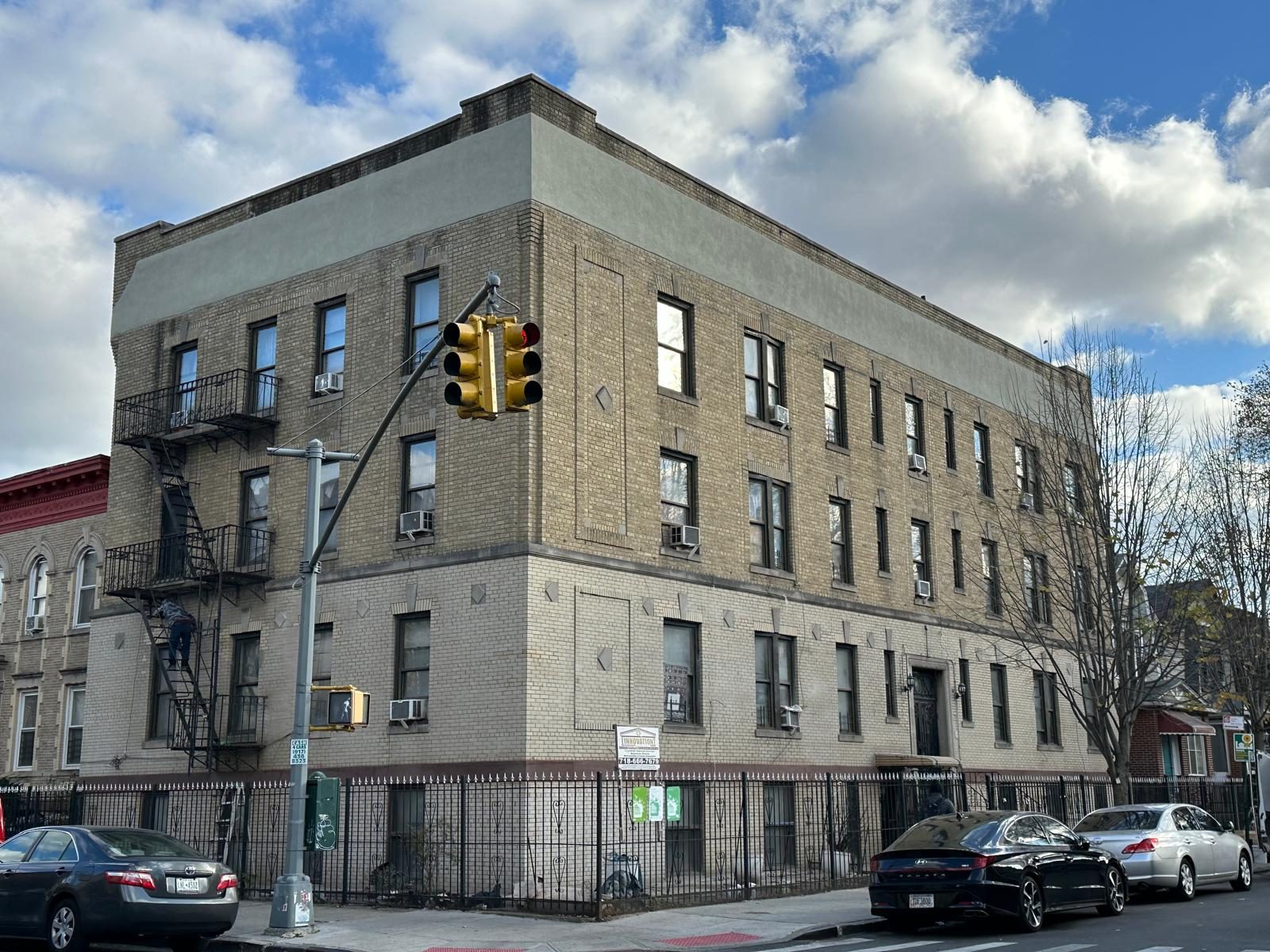
Every New York City homeowner is legally responsible for the sidewalk in front of their property — the curb, the apron, the tree pit. Once the NYC DOT issues a sidewalk violation (a 'red tag'), the homeowner has 75 days to repair it before the city does the work and bills you — usually at three times the cost of a private contractor. Beyond compliance, restored bluestone or properly cured concrete is part of the building's value and curb appeal.
Modern NYC concrete sidewalks are specified at 4,000 psi air-entrained concrete, 5 inches thick (6 inches at driveway aprons), with control joints every 5 feet and expansion joints at curb meets. The DOT inspector checks slope, surface finish, joint spacing, and integration with the curb. A cosmetically pleasing pour that misses the slope spec will fail inspection.
Historic NYC neighborhoods — especially Park Slope, Fort Greene, Brooklyn Heights, and parts of Carroll Gardens — were originally laid with Pennsylvania bluestone from the same quarries that supplied the city in the 1880s. Where bluestone is salvageable, we reset it on new sand and concrete base. Where it's beyond saving, we source new bluestone from the same quarries — the color and grain match the surviving original work on the block.
No black box. Here is the exact sequence we follow on every project, from first phone call to final inspection.
We pull any existing DOT violation on the property, measure the affected area, document the existing condition, and check for tree pit and curb integration.
We file the required DOT sidewalk permit, pay the permit fee, and post the property notice. Inspection scheduling is coordinated through the permit.
Failed concrete is broken out and removed. The subgrade is leveled and compacted. New compacted gravel base is laid where required. Drainage is checked at the curb.
Forms are set to grade with proper slope (1/4" per foot away from the building). Where the section abuts a driveway or curb cut, #4 rebar is set at 18-inch spacing.
4,000 psi air-entrained concrete is poured, screeded, and floated. Surface is broomed or wood-floated to match adjacent. Control joints are tooled at 5-foot intervals.
Bluestone slabs are reset on a leveled sand bed over compacted subgrade. Joints are sand-swept and finally sealed with polymer sand. Existing bluestone is salvaged wherever possible.
Concrete is kept moist for 7 days during cure. After 28-day full cure, we schedule the DOT inspection. We accompany the inspector and resolve any findings on the spot.
Materials matter as much as workmanship. The wrong material can shorten a façade's life by decades.
The most common — and most expensive — mistakes we see on prior unsuccessful restoration work.
Standard NYC concrete sidewalk replacement runs $15-$25 per square foot, depending on access, demolition requirements, and DOT permit fees. A typical 5-foot-wide x 20-foot front sidewalk costs $1,500-$2,500 for full replacement. Bluestone restoration runs significantly higher — $40-$80 per square foot — but most of that cost is reset labor rather than material.
A DOT sidewalk violation (Notice of Violation, or 'red tag') is issued by the NYC Department of Transportation for sidewalks that fail their inspection criteria: cracks wider than 1/2 inch, vertical separations over 1/2 inch, missing concrete, ponding water, or other safety hazards. The property owner has 75 days to correct before the city performs the work and bills the owner.
Yes, in many NYC neighborhoods. The DOT allows bluestone as a sidewalk surface, especially in historic districts where it was the original material. Bluestone must be set on a concrete or compacted base and must meet ADA requirements at curb cuts and ramps.
A typical residential sidewalk replacement takes 1-3 days for the actual work, plus 28 days of cure time before the DOT inspection can be scheduled. Most projects close out within 6-8 weeks from start to violation closeout.
Yes. Any sidewalk work requires a DOT permit. The permit costs vary by length and project type. We pull the permit on your behalf and post the property notice. The permit must be open during the work and closed out at DOT inspection.
Free on-site assessment. Written estimate within five business days. No fee, no obligation.