The Brooklyn stoop is structural sculpture. Every tread, every newel post, every iron handrail tells you something about who built the block.
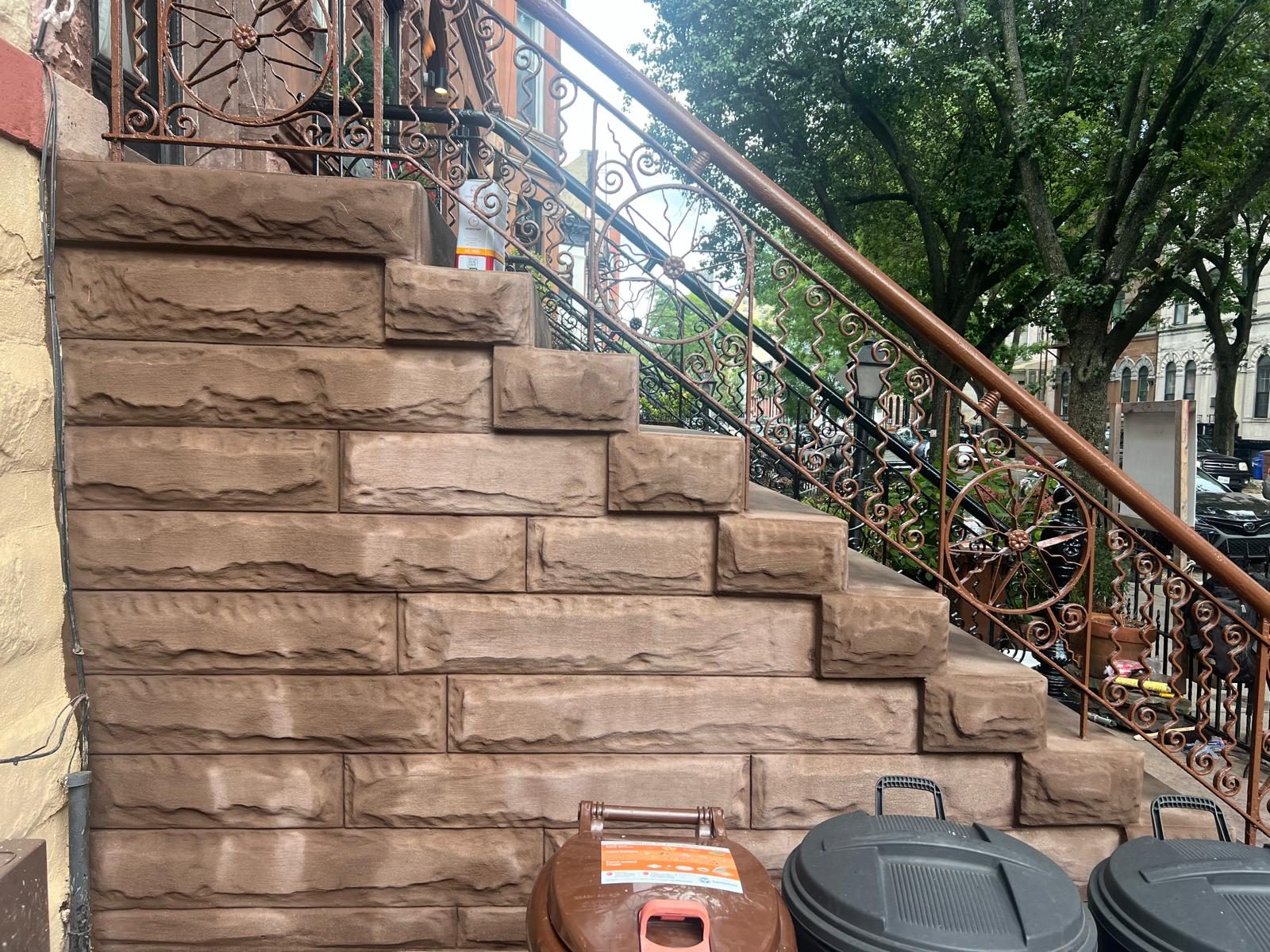
The Brooklyn stoop is the most photographed feature of every brownstone block. It's also structural — each tread is a 4-foot-wide, 600-pound block of brownstone or bluestone, set on stepped masonry side walls that taper outward from parlor floor to sidewalk. Decorative balustrades flank each side, capped by urn-topped or ball-topped newel posts. Ornamental iron handrails run the full length, often with intricate C-scrolls and acanthus leaf detail. When a stoop fails, it fails visibly — and dangerously.
Stoops fail in three modes. First, the iron railings detach from the stone — the wrought iron has corroded inside the lead anchors, and the whole rail can swing loose. Second, the treads themselves spall or crack — water gets under the joint, freezes, and pops a corner off. Third, and most dangerous, the side walls themselves lean or settle, throwing the entire structure out of plumb. NYC issues stop-work orders on stoops that have visibly settled.
We rebuild stoops the way they were originally built. Side walls are stepped course by course in NHL lime mortar. Treads are set on full beds with steel pins. Balusters are hand-carved or pattern-cast to match the original profile. An entire stoop reconstruction takes us four to six weeks, and every joint matches the original profile.
No black box. Here is the exact sequence we follow on every project, from first phone call to final inspection.
We probe the side walls for settlement, sound each tread with a hammer for hidden cracks, and inspect the connection between the iron handrail and the stone. Photographs document the original profile of every carved element.
Failed treads are removed by hand. Newel post caps and balusters are tagged and saved if salvageable. The iron handrail is removed to our shop for separate restoration.
Failed masonry is removed back to sound material. The side walls are rebuilt in NHL lime mortar, stepped to match the original tread coursing. Through-wall flashing is installed at the base to prevent rising damp.
New treads are set on full beds of mortar and pinned to the side walls with stainless steel dowels. Each tread is leveled and squared to the original profile. Nosing detail (the shadow line below each step) is restored.
Replacement balusters are hand-carved or pattern-cast in pigmented lime aggregate. Newel posts are rebuilt with carved cap molding. Urn finials are turned to match the original or commissioned new from period catalogs.
Handrails are sandblasted, repaired (welded or replicated as needed), zinc-primed, and topcoated. Decorative scrollwork is patternmatched to original.
The restored handrail is reset into the stone with lead-and-oakum anchors (period-correct) or stainless epoxy anchors (modern). All joints are pointed with NHL mortar matching the original.
Materials matter as much as workmanship. The wrong material can shorten a façade's life by decades.
The most common — and most expensive — mistakes we see on prior unsuccessful restoration work.
A full stoop reconstruction on a Brooklyn brownstone — including side walls, treads, balusters, newel posts, and handrails — typically runs $35,000-$95,000 depending on the level of carved detail. Single-tread replacement starts around $4,500.
Four to six weeks for a complete reconstruction, including curing time for the lime mortar and handrail shop work. Spot repairs (one or two treads) can be completed in one to two weeks.
Yes. We hand-cast replacement balusters and newel cap details from pattern molds of the original elements. For missing detail (where no original survives), we replicate based on period catalogs and adjacent buildings on the block.
If the stoop is on a landmarked property, yes — even like-for-like repair typically requires a Certificate of No Effect or Permit for Minor Work. We handle the filings. For non-landmarked properties, structural work generally requires a DOB permit.
Brownstone (sandstone) was the predominant material in mid-19th century NYC — warm brown color, soft and carveable. Bluestone (a sandstone-siltstone) was used on later stoops, especially in Park Slope and Fort Greene — harder, more weather-resistant, and gray-blue in color. The choice depends on what was originally there. Mixing the two looks wrong.
Free on-site assessment. Written estimate within five business days. No fee, no obligation.